The Distribution Layer
Gateways
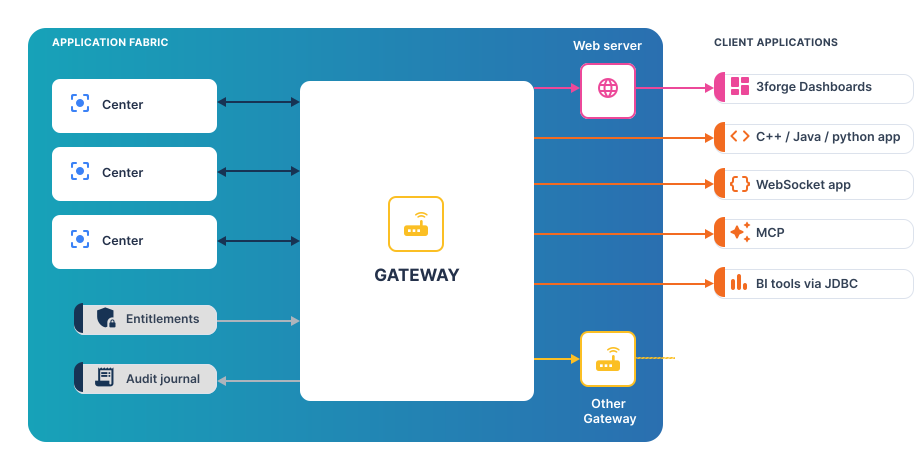
Gateways are the governed layer where applications, agents and external integrations connect to one interface to query data, subscribe to streams and invoke procedures across several Centers.
Function inside the fabric
A single interface in front of many Centers
A Center holds state, and a single Center can serve applications directly. Scale divides it: by asset class, by region, by the boundary between live state and history. Without a layer above, every consumer inherits that division and must be revised each time it moves.
A Gateway answers for the whole estate. Requests are resolved across the Centers behind it, Centers are added and removed without a restart, entitlements and audit apply at the point of entry, and caching, conditional streams and fan-out keep growth in consumers from becoming proportional load on the infrastructure beneath.
Consumers depend on a fixed contract. What sits behind it stays free to change.
Key capabilities
Access, efficiency and control in one layer
Insulating consumers from data estate complexity
- Aliasing
- Virtual tables
- Virtual streams
- Virtual procedures
Bandwidth and performance optimization
- Data caching
- Conditional streams
- Dynamic subscriptions
- Fan-out subscriptions
Scalable infrastructure with governance built in
- Load balancing
- Dynamic composition and self-healing
- TLS, with SSO, RBAC and OAuth compatibility
- Access journal
Example patterns
How Gateways are deployed
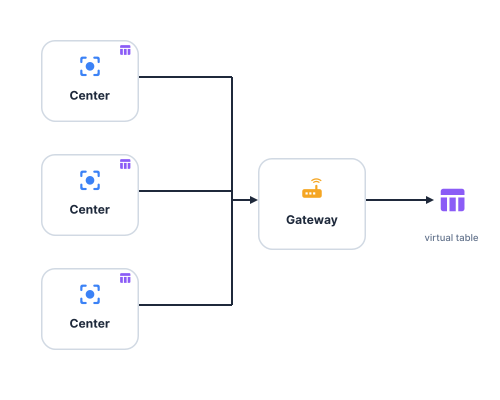
Virtual tables over a sharded estate
- Shards presented as one table, with the Gateway planning the query across them
- Consumers write the SQL they would write against a single Center
- Schemas need not match, one shard can gain a column without the others changing
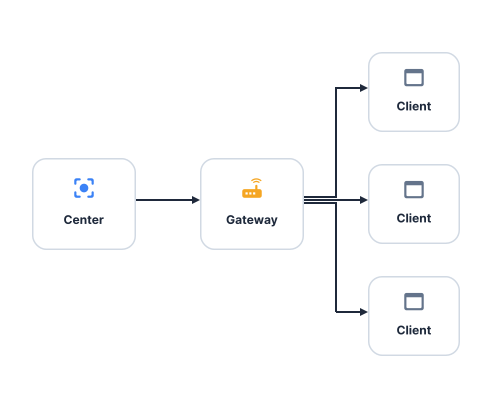
Fan-out subscriptions
- Demand on a trading floor overlaps heavily, the same instruments, adjacent columns, marginally different filters
- Handled individually, the source bears the full multiple
- The Gateway consolidates the overlap into a single upstream subscription, then serves each subscriber its own filtered rows and columns
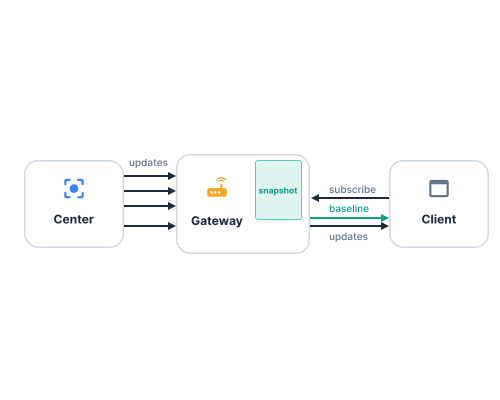
Caching the state of the world
- Every subscriber needs the current picture, before it can start applying updates
- A dashboard opened across a floor asks for it again with each session
- The Gateway caches common queries and the opening snapshot, so the Center only handles work that is new
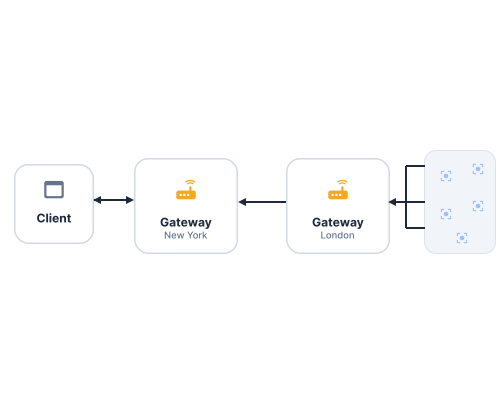
Gateway to Gateway, across regions
- Gateways call other Gateways, so a desk connects locally and cross-region requests hop between them
- No cross-region connection per consumer
- Each site keeps its own entry point, cache and journal, while the estate behind them stays one logical data set
Application Delivery
Gateways distribute the data. Web Servers turn it into an application.
Tailored, real-time applications assembled from grids, pivots, charts and trees, running on the data the fabric already holds.